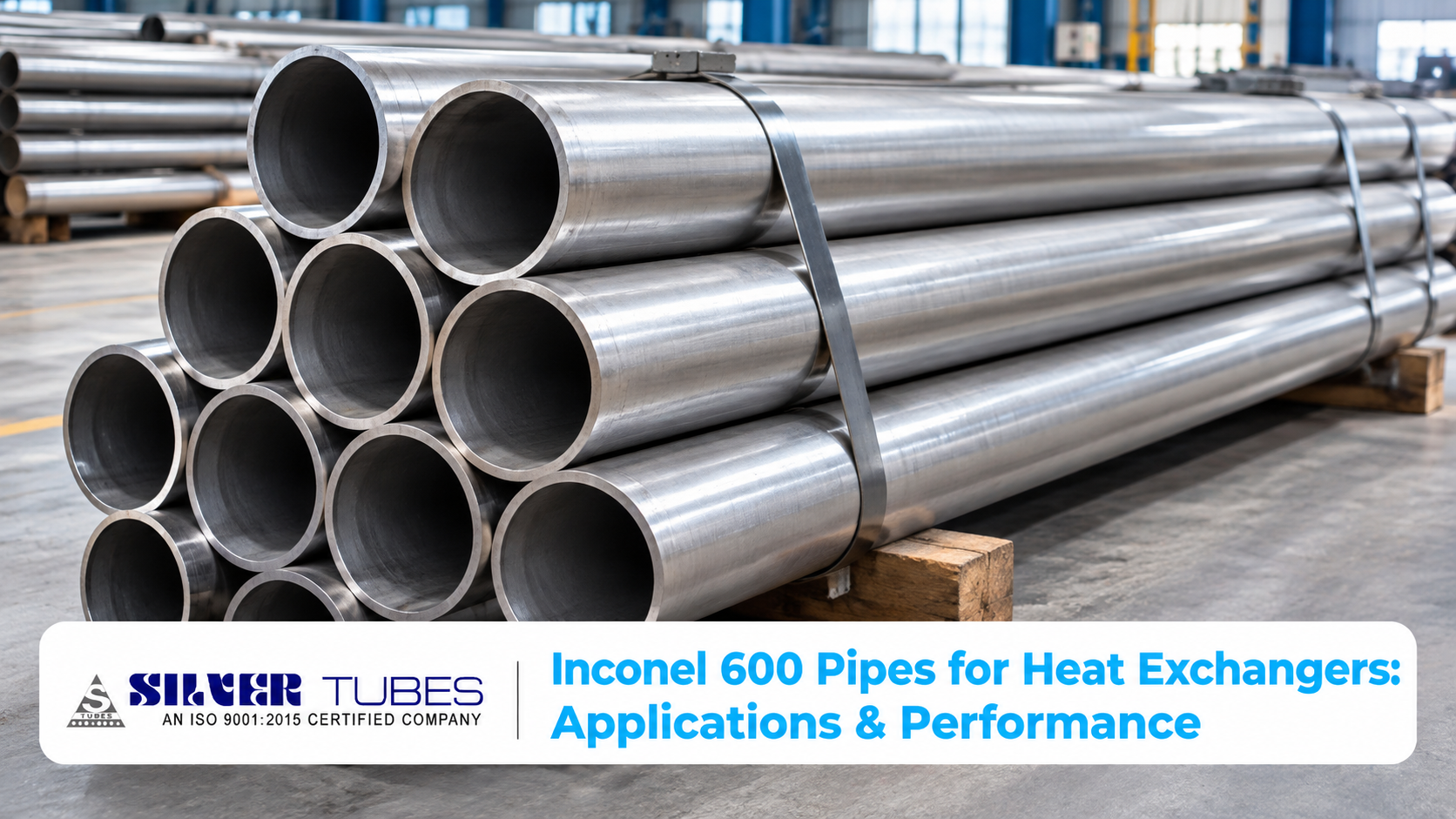
Heat exchangers go through constant temperature swings, aggressive fluids on one side, and pressure on the other. Ordinary alloys don’t hold up under that combination for long. Inconel 600 pipes are a nickel-chromium alloy product made for heat-transfer work where temperature, pressure and oxidation all come into play. Whether the material actually performs well comes down to matching it to real service conditions. This piece covers the properties, applications, performance, and what to check before selecting them.
Why Is Material Selection Important for Heat Exchanger Pipes?
Pipes and tubes in heat-transfer equipment do the hard work. They separate hot and cold media while dealing with temperature differences, pressure changes and repeated thermal cycling. Picking the wrong alloy can lead to corrosion, degradation, eventual leaks and unplanned downtime. Both sides of the system need attention.
What Are Inconel 600 Pipes?
Inconel 600 is a nickel-chromium alloy. It stays stable at elevated temperatures, which is the main reason it gets used. Inconel 600 pipes show up in industrial systems needing suitable resistance to heat and oxidation, things like process piping and heat-transfer circuits. That’s where the relevance to heat exchangers comes from. Whether it’s actually the right pick still depends on the medium running through it and the conditions on site.
Key Properties of Inconel 600 Pipes for Heat Exchangers
High-Temperature Resistance
Strength doesn’t drop off as temperatures rise, as it does in standard alloys. Matters in exchangers handling high-temperature streams where lesser materials start to soften.
Oxidation Resistance
A chromium layer forms on the surface and limits scale buildup. Useful in equipment running continuously in suitable high-temperature, oxygen-heavy conditions.
Corrosion Resistance
Resists corrosion in the right environments, though this isn’t a blanket guarantee. Comes down to the specific fluid and chemical conditions involved.
Thermal Stability
Performs consistently through heating and cooling cycles, which matters for continuous or cyclic operations where dimensional stability under stress affects how long things last.
How Do Inconel 600 Pipes Perform in Heat Exchanger Applications?
The properties above set a baseline. What actually happens on site depends on more than that. Inconel 600 pipes hold up against high-temperature degradation in suitable conditions and keep mechanical integrity under combined thermal and pressure stress. No material comes with a fixed service life, and none resists corrosion universally. Fluid velocity, fabrication quality, and ongoing maintenance play a part too.
Applications of Inconel 600 Pipes in Heat Exchanger Systems
Chemical Processing Heat Exchangers
Depends on the chemical media in question. Match the pipe grade to actual process-fluid compatibility.
High-Temperature Industrial Equipment
Furnace-related heat-transfer systems and thermal processing lines often need alloys built for sustained heat exposure, which is where Inconel 600 pipes get specified.
Power Generation Systems
Certain heat-transfer and high-temperature components in power generation equipment use Inconel 600 pipes, usually following the project specification directly rather than a general assumption.
Petrochemical and Process Industries
Some specialised process equipment exposed to demanding thermal conditions uses this alloy. Suitability varies unit by unit, it’s not a fit for every petrochemical environment.
Inconel 600 Pipes vs Conventional Heat Exchanger Materials
Choosing between Inconel 600 pipes and conventional alloys is about matching capability to what the service demands, not assuming one wins in every case.
| Selection Factor | Inconel 600 Pipes | Conventional Heat Exchanger Materials |
| High-Temperature Performance | Suitable for demanding service | Grade-dependent |
| Oxidation Resistance | Strong in appropriate conditions | Material-dependent |
| Corrosion Resistance | Suitable for selected environments | Grade-dependent |
| Thermal Stability | Suitable for thermal service | Material-dependent |
| Material Cost | Generally higher | Often lower |
| Selection | Specialised applications | General application requirements |
Conventional stainless steels or other alloys can work just as well depending on the environment, so treat each project on its own terms rather than defaulting to one alloy.
Key Factors to Consider When Selecting Inconel 600 Pipes
- Operating temperature range tells you whether the alloy’s high-temperature strength is even needed.
- System pressure and design requirements affect wall thickness and the mechanical rating you’ll need.
- Process fluid and chemical compatibility have to be confirmed; don’t assume corrosion resistance applies.
- Pipe dimensions and wall thickness need to line up with the exchanger’s design.
- Thermal cycling conditions affect how the material behaves over repeated cycles.
- Fabrication and welding requirements shape how the pipe fits into the assembly.
- Applicable ASTM/ASME or project specifications set the grade and testing required.
- Testing and documentation requirements confirm the pipe meets traceability standards.
Quality and Testing Considerations for Heat Exchanger Pipes
Before specifying Inconel 600 pipes, check the exact material grade and confirm the chemical composition matches what’s specified. Mechanical properties should be checked where relevant, along with dimensions and wall thickness tolerances. Ask for Material Test Certificates on every batch, confirm traceability where needed, and review any extra testing the project calls for.
Common Material Selection Mistakes to Avoid
Picking material purely on maximum operating temperature, without checking fluid compatibility, is a mistake we see often. Same with skipping corrosion or thermal cycling checks, getting dimensions wrong, missing certification paperwork, or choosing on upfront cost alone. These surface after installation.
Conclusion
Inconel 600 pipes stay relevant for heat exchangers dealing with demanding, high-temperature, oxidation-prone conditions, provided they’re matched to the service properly. Checking temperature range, process media, pressure and project specs before selection matters most. Silver Tubes stocks and supplies Inconel 600 pipes for heat exchanger and process applications. Get in touch for stock availability and Material Test Certificates for your specification.