Stainless steel is a sturdy and useful metal used in many industries. However, when it comes to the critical oil and gas industry, there is no room for error. 321 Stainless steel is one such metal widely used in this industry. It is an austenitic stainless steel with an excellent corrosion resistance property. Along with its anti-corrosive properties, it performs well in extreme temperatures and is resistant to scaling and oxidation at elevated temperatures. Here is all you need to know about 321 stainless steel pipes in the oil and gas industry.
What is 321 Stainless Steel Pipe?
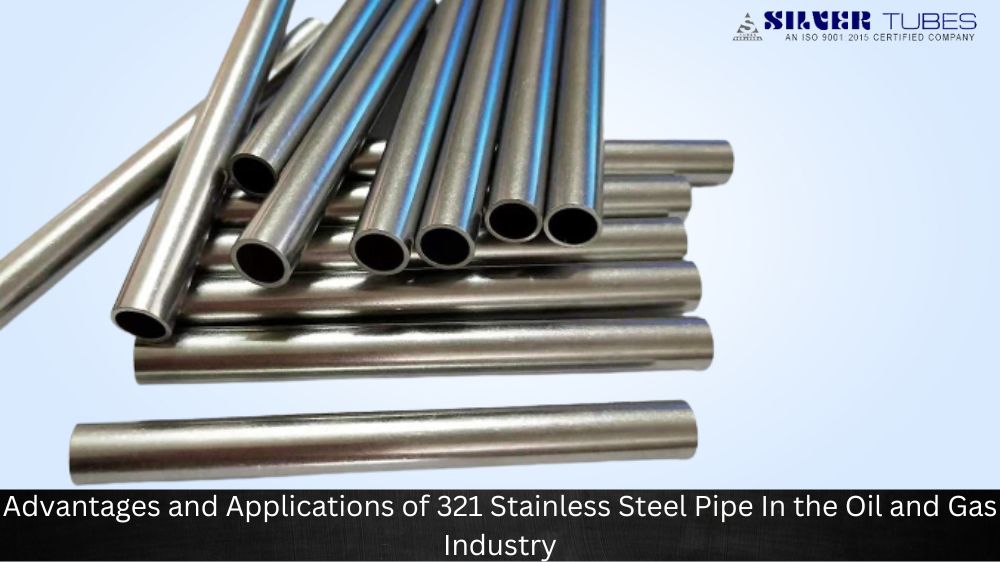
321 Stainless Steel Pipe is a titanium-stabilized, chromium-nickel austenitic stainless steel tubing used for corrosive and high-temperature service. It has exceptional resistance to intergranular corrosion after exposure to temperatures in the chromium carbide precipitation range of 800 – 1500°F (427 – 816°C). Its superior resistance to thermal fatigue and cyclic heating makes it ideal for use in these environments. Furthermore, its low carbon content increases its resistance to intergranular corrosion while providing an improved response when exposed to extreme temperatures.
Advantages of 321 stainless steel pipes
The most dangerous challenge engineers face in the oil and gas industry is pipeline corrosion. 321 stainless steel pipes resist high temperatures and sustain high pressure and fluctuations without cracking or breaking. It is also resistant to scaling and oxidation, which makes it an excellent choice for oil and gas pipelines, heat exchangers, and process piping.
Applications of 321 stainless steel pipes
The 321 stainless steel pipes are extensively used to distribute oil and gas in various sectors like refineries, petrochemical plants, power plants, and liquefied natural gas (LNG) plants. It is also used as a heat exchanger due to its high-temperature stability and resistance to scaling and oxidation. Additionally, the 321 stainless steel pipes are employed in cryogenic applications requiring low temperatures.
Welding properties
321 stainless steel pipes have excellent welding properties and can withstand rigorous welding operations. This characteristic makes it an ideal material for offshore oil and gas drilling, where welding is extensively used for connecting pipes and repairing damages caused by environmental factors.
Environmental sustainability
Using stainless steel in the oil and gas industry also promotes environmental sustainability. Stainless steel is 100% recyclable, and its strength and corrosion-resistant properties make it possible to fabricate pipes that can last for decades. Long-lasting pipes mean less environmental damage from corrosion and less reliance on raw materials.
Cost-effectiveness
321 stainless steel pipes are a long-term investment for the oil and gas industry as they require less maintenance and repair and last longer than other piping materials. Although the initial cost of the 321 stainless steel pipes is higher than other materials, they are more cost-effective in the long run due to their durability and high resistance.
Conclusion:
In conclusion, the advantages and applications of 321 stainless steel pipes in the oil and gas industry are extensive. Aside from its high corrosion-resistant property, it is also weldable, environmentally sustainable, and cost-effective in the long run. It is a critical element for the industry, and choosing the right type of pipe that can withstand extreme conditions is essential to minimize the damage and, ultimately, expenses. So, if you are in the oil and gas industry, consider 321 stainless steel pipes for your next project to ensure strength, durability, and longevity.